New guidance on sizing a breastshield/flange
October 2022

During a talk for the Gold Lactation conference in May 2022, Jeanette Mesite Frem MHS, IBCLC, RLC, CCE discussed her groundbreaking study into flange sizing:
https://pubmed.ncbi.nlm.nih.gov/39614713/
Jeanette has discovered that many people should actually be using a flange size a lot smaller than the standard sizes provided by pump manufacturers. If used with a little lubrication from some coconut oil, apparently a smaller flange size will increase milk yield quite substantially. (Jeanette said lanolin or vaseline are too sticky).
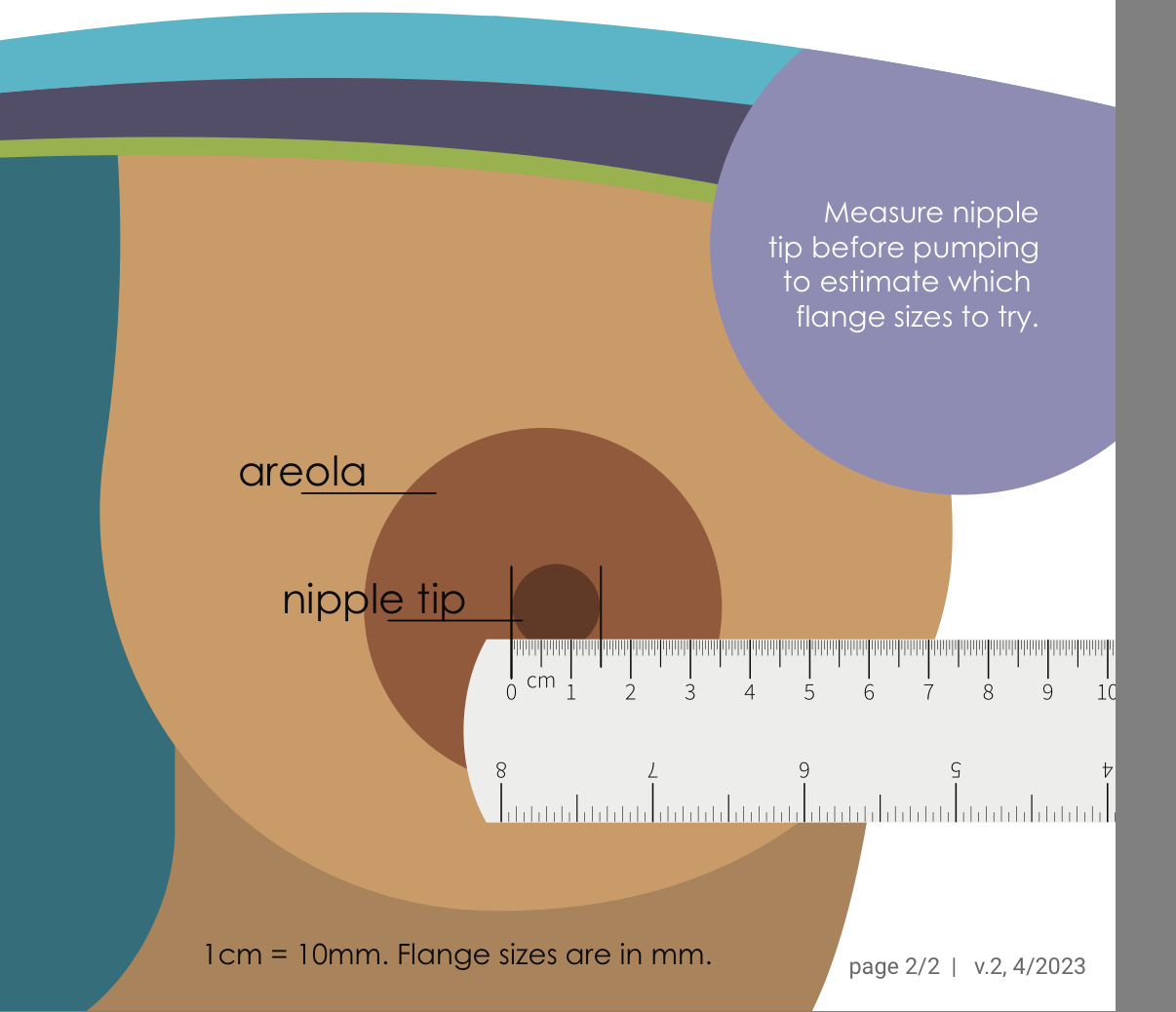
She suggested measuring the diameter of the nipple and then trying sizes of that diameter, 2mm bigger and 2mm smaller and seeing what happens. This is totally different to what is suggested currently, which is to measure the nipple and add 2-5mm.
(This is what pump manufacturers currently suggest: https://www.verywellfamily.com/ways-to-tell-if-your-breast-pump-flanges-fit-2758354 )
Many pump manufacturers have 21mm as their smallest size, but the following inserts can be used with Spectra and Medela pumps and come in smaller sizes:
https://www.amazon.co.uk/s?k=maymom&crid=2YUWQJ1DVODQI&sprefix=maymom%2Caps%2C89&ref=nb_sb_noss_1
Please make sure you don’t cause any damage or hurt yourself; if it doesn't feel right, stop and try another size.
With thanks to Kathryn Stagg IBCLC for the summary above of Jeanette Mesite Frem’s suggestions. The illustrations below by JoJo Ford are from Kathryn Stagg’s book Breastfeeding Twins and Triplets.
Updated April 2026
Information courtesy of Amber Clark, RN, TTP, IBCLC
As reported by Cordelia Uys, NCT-trained Breastfeeding Counsellor
On the 26th March 2026, I attended a talk by Amber Clark at the BfN Lambeth Study Day entitled The Importance of Flange Sizing with the Hospital Community Setting.
Amber did her own research into flange sizing as she said that currently there is low level of knowledge of the impact of correctly fitted flanges.
Different sizes are not available on the wards or provided with the pump kits, and women are required to purchase their own.
How to measure nipples
In her study, Amber Clark noted that a correctly fitted flange can help to:
Increase colostrum/ milk output
Decrease pain and swelling
Reduce risk of mastitis.
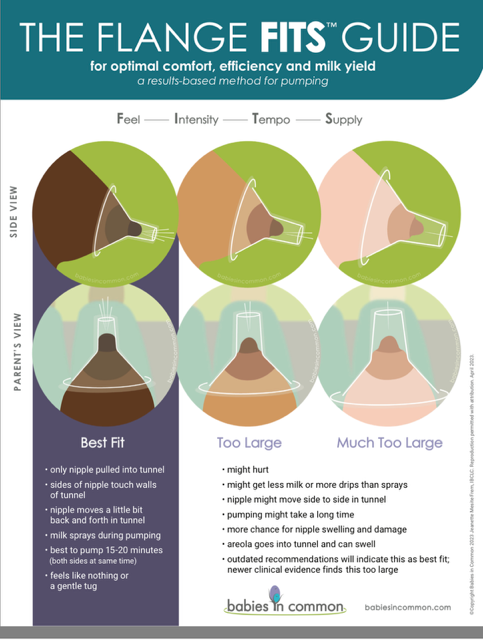
Best fit
Only nipple pulled into tunnel
Sides of nipple touch walls of tunnel
Nipple moves a little bit back and forth in tunnel
Milk sprays during pumping
Best to pump 15-20 minutes (both sides at same time)
Feels like nothing or a gentle tug
Too Large
Might hurt
Might get less milk or more drips than sprays
Nipple might move side to side in tunnel
Pumping might take a long time
More chance for nipple swelling and damage
Areola goes into tunnel and can swell
Outdated recommendations will indicate this is the best fit; newer clinical evidences finds this is too large.
Research evidence
‘Flange Size Matters: A Comparative Pilot Study of the Flange FITS™ Guide Versus Traditional Sizing Methods’. This was published in the Journal of Human Lactation by Lisa A. Anders, Jeanette Mesite Frem, and Thomas P. McCoy (see link below).
Research found that the standard fit flanges had significantly less milk output and less comfort when compared to the newer small-size fitting.
The paper concluded that:
‘Flange fitting is a process that should be individualized to the patient and may require a trial of one or more sizes during a pumping session. Smaller sizes determined using this individualized process and starting with nipple tip measurement may be used without compromising milk output or comfort.’
Amber’s Top Tips for Expressing
Measure both nipples
Frequent sustainable stimulation, avoiding long gaps
Start with initiate/stimulate/massage
To increase milk yield and fat content, use
"hands on pumping" as well as double pumping
Amber’s Tips for Expressing Colostrum
Colostrum is the first milk your body produces following birth. It is thick, nutrient-rich, and high in antibodies.
Colostrum helps to protect babies from infection and supports their immune system. It helps their digestive system to develop and helps prevent jaundice. It is particularly beneficial for premature babies, helping reduce the risk of necrotising enterocolitis, and is a recommended element of preterm optimisation.
Pump from day 0 for parents with babies not feeding effectively or directly from the breast, followed by hand expressing
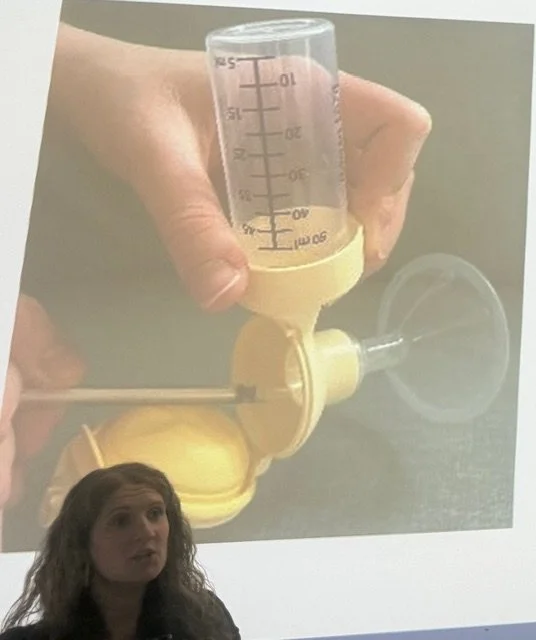
When expressing colostrum, hold collection kit upside down; when you’ve finished pumping, use a syringe to collect the colostrum.
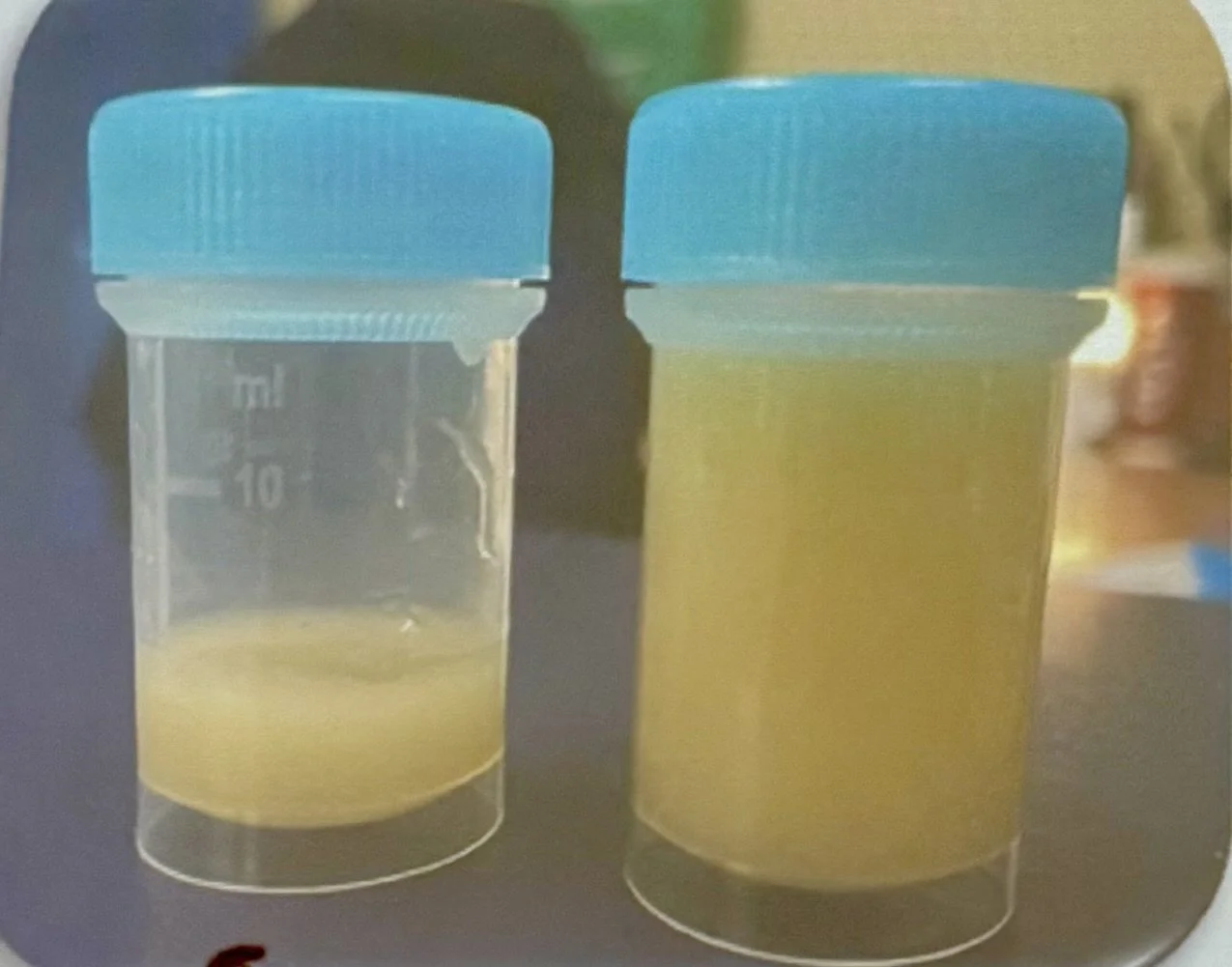
These photos were taken at University Hospital Southampton, and both pots were filled after 15 minutes of pumping just 48hours after giving birth. Prior to swapping to the correct flange size, the colostrum gathered barely covered the bottom of a single pot.
The Flange Fits Guide
For more detailed guidance on figuring out the right size flange and how to pump, see this guide:
Links:
‘Flange Size Matters: A Comparative Study of the Flange FITS Guide Versus Traditional Sizing Methods’: https://journals.sagepub.com/doi/epub/10.1177/08903344241296036
Expressing Breastmilk - Patient Information Video: https://vimeo.com/1048952527
Information on expressing from University Hospital Southampton:
https://healthinnovationwessex.org.uk/projects/658/early-breast-milk-improvement-project-toolkit